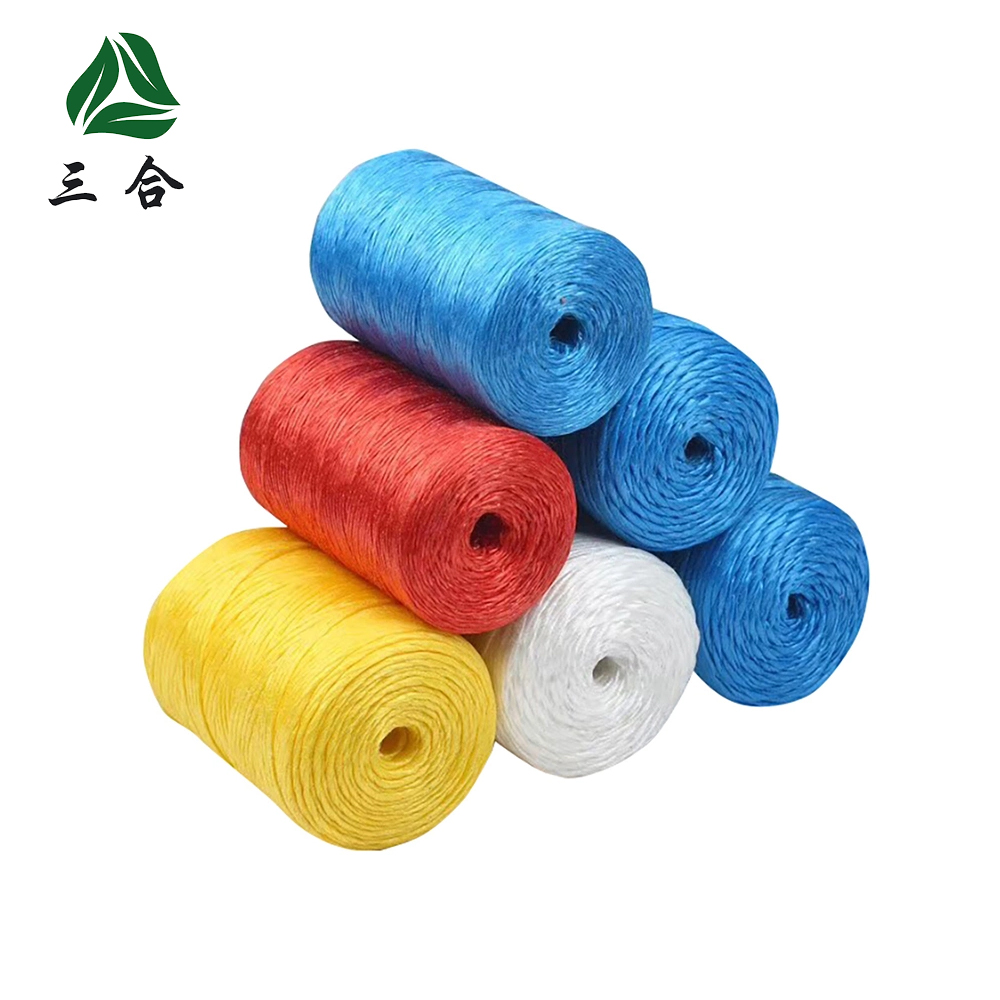
How to Choose the Right Baler Twine for Square Balers
Choosing the right baler twine is important for producing secure, consistent bales and maintaining efficient baling operations. For hay producers, farms, agricultural contractors, and distributors, the right twine should provide sufficient strength while feeding smoothly through the baler.
Different baling conditions require different specifications, so buyers should consider more than price when sourcing square baler twine.
1. Consider the Type of Baler
The first step is to make sure the twine is suitable for the intended machine.
Baler twine is commonly used with square balers, while baler net wrap is generally used with round balers. Square balers can produce different bale sizes and densities, so the required twine strength may vary according to the machine and application.
Before purchasing, buyers should confirm the recommended twine specification for their baler model.
2. Check Twine Strength
Strength is one of the most important specifications when choosing baler twine. The twine needs to withstand tension during baling, tying, handling, transportation, and storage.
If the twine is too weak, it may break during the tying process or while bales are being moved. For higher-density bales, buyers may require stronger twine to maintain bale integrity.
SANHE produces baler twine with strength of up to 500 kg, providing options for different square baling applications.
3. Look for Consistent Quality
A good baler twine should have consistent thickness, strength, and winding throughout the roll. Variations can affect feeding and knotting performance and may increase interruptions during baling.
For distributors, consistency is especially important because customers expect the same performance from one shipment to another.
When evaluating a supplier, buyers should consider not only the specification listed on the product sheet but also the manufacturer's production experience and quality-control process.
4. UV Protection Matters
Bales are often stored outdoors, where twine can be exposed to sunlight for long periods. UV protection can help the material maintain its performance during storage.
When sourcing baler twine, buyers should ask about the UV protection used in production and consider the expected storage conditions in their market.
For agricultural distributors selling into regions with strong sunlight or long outdoor storage periods, UV protection can be an important product specification.
5. Choose the Right Roll Specification
Roll weight, twine length, color, and packaging can vary according to the requirements of different markets.
For example, SANHE currently supplies 10 kg baler twine rolls for specific customer requirements. Customized colors, labels, packaging, and other specifications can also be discussed for OEM or private-label orders.
Before requesting a quotation, buyers should provide the required twine type, roll weight, length, color, and packaging requirements whenever possible. This allows the manufacturer to prepare a more accurate quotation.
6. Work With an Experienced Manufacturer
For distributors and agricultural machinery dealers, choosing the supplier can be just as important as choosing the product.
SANHE has more than 15 years of manufacturing experience in agricultural products and supplies baler twine, baler net wrap, and silage film to international markets. The factory also supports OEM and private-label requirements for customers looking for customized agricultural packaging and products.
For buyers looking for a reliable square baler twine supplier, comparing strength, consistency, UV protection, roll specifications, and manufacturing capability can help identify a product that matches their market and application.
Need a quotation for baler twine? Send us your required strength, roll weight, length, color, and packaging details, and SANHE can provide a factory quotation based on your specifications.